
What We’re Missing About Midlife Health
Jan 12, 2026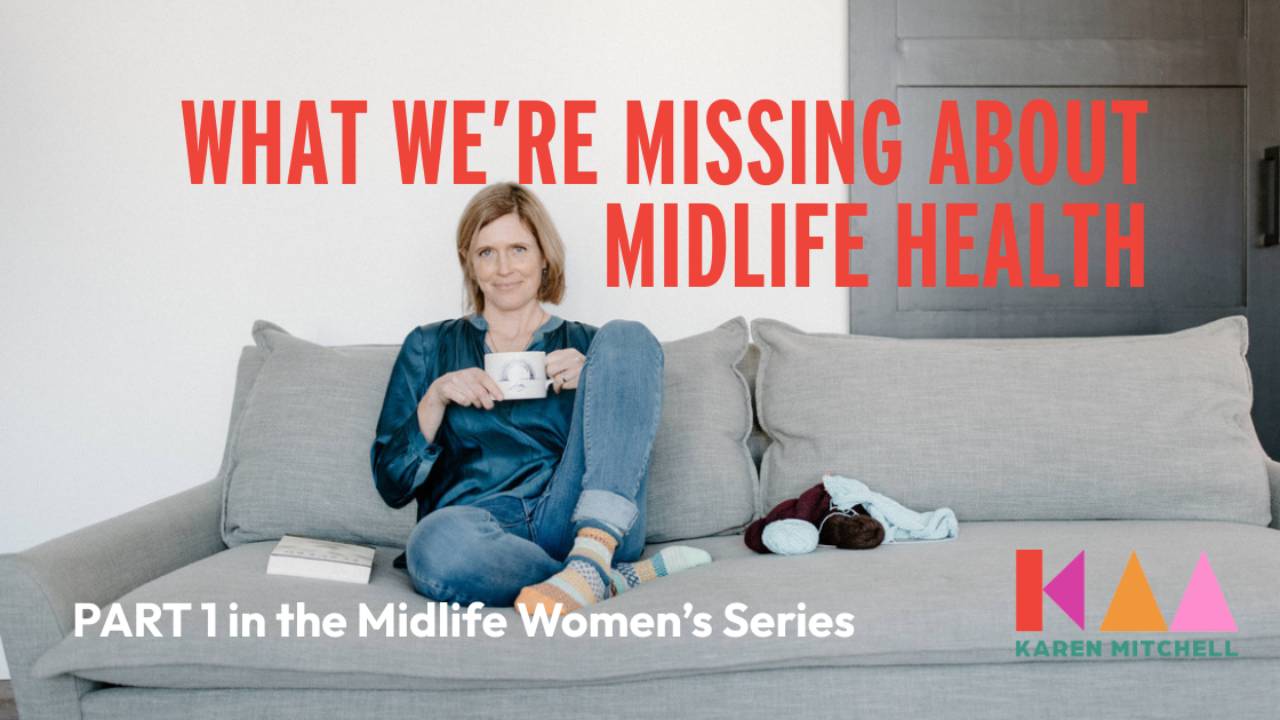
This is Part 1 of the Midlife Women's Series.
I don’t know about you, but I get lost amidst all the noise online about nutrition, midlife hacks to balance hormones, and the endless advice on when I should eat, how I should exercise, and what I should do in my free time to be healthy. And this is coming from me—a trained health, wellness, and nutrition professional. Somehow, when I look online, I suddenly feel “less than” or behind the ball.
Even at the gym the other day, as I was talking with a friend about a few aches and soreness from the previous day’s workout, another well-meaning gym-goer jumped in and touted the benefits of a new supplement, encouraging us to try it. I paused, considered what they were saying, and then realized that the recommended supplement wouldn’t solve a thing. And honestly—did I even have a problem that needed to be solved?
The truth is, people in general—and women in midlife especially—are being targeted with an overwhelming abundance of health advice. Lift heavy. Walk with a weighted vest. Intermittent fast. Eat more protein. Red light therapy is the key (to what?). Creatine will save the world. Too much endurance training is bad, but HIIT workouts are in—just not more than two or three times a week. If you buy into all the free tips and advice out there, you might start to feel like you need to quit your job just to schedule your day around doing everything “right.”
But here’s the thing: health recommendations shouldn’t be one-size-fits-all. You are unique. What works for an influencer may not work for you—and in some cases, it may actually make you feel worse.
Doing more won’t fix midlife health.
Doing the right few things—in the right order, consistently—will.
So what if we look more deeply? What do we actually need to feel balanced and whole? This is where individuality truly matters. We are all unique, everything is connected, and all things matter.* Your story and your day-to-day life are essential clues to what will genuinely support your health.
In functional medicine and nutrition, personalized, root-level support is key to creating habits that actually move you toward longevity and well-being. Simple, small changes—backed by scientific research—help cut through the trial-and-error cycle and reduce the pull to chase every new health fad that comes along.
Managing our bodies, hearts, and minds in midlife looks very different than it did for our mothers or grandmothers. Today, we live in a world with more chemicals in our environment (nearly 2,000 new chemicals are introduced each year), more stress on the liver for detoxification, and more overall stress from a fast-paced, always-on lifestyle. Adults ages 45–64 report significantly higher stress levels now than in previous decades. Add to that the rise in food additives and ongoing soil depletion, and it’s become harder than ever to eat a truly nutrient-dense diet.
Many of us are also part of the sandwich generation—caring for aging parents while parenting children at home. We’re juggling careers, often out of financial necessity. Running a household on one income is increasingly unrealistic, with housing costs far higher than they were decades ago. Many women work outside the home and still shoulder the majority of the cooking, house care, and childcare.
On top of that, concerns about retirement and long-term financial security keep many women awake at night. Women’s roles have expanded far beyond what was true for our mothers and grandmothers—for better and for worse.
I’m also noticing that age has become more relative. I’m 50, and while I’m postmenopausal, I’m still vibrant and busy. Social norms around what women can do at different ages are changing quickly. We can have 35–40 years of life after menopause, and many women today want to stay engaged, curious, and active rather than slow down.
By the way, perimenopause wasn’t even a commonly used term until the mid-1980s. Now, in the 2020s, it’s everywhere.
And there’s one more thing that needs to be said: our culture places enormous value on youth and beauty, putting intense pressure on women to look and feel younger. Wrinkles, weight gain, and gray hair should be seen as the prize that comes with years of lived experience and wisdom. Instead, we’re told that aging isn’t beautiful, that wrinkles aren’t attractive, and that gray hair is dull or undesirable.
As if it weren’t enough to spontaneously sweat or lie awake in the middle of the night.
So how do you separate reality from distraction when caring for your midlife body?
Honestly, the sheer volume of information—and expectation—can feel exhausting. And that’s coming from someone with years of education and experience in nutrition and wellness.
According to a U-bend self-reported wellbeing study, women ages 50–53 report the lowest levels of wellbeing of any age group. The good news? Wellbeing scores steadily increase from there through the rest of life.
That matters.
In the next post, we’ll look more closely at how to discern which changes are actually worth your energy—and which ones are simply more noise—for your unique body.
*said by my mentor Andrea Nakayama.
References:
Across Generations https://www.ewg.org/research/across-generations#:~:text=Mothers%20harbored%20in%20their%20bodies,known%20as%20PFOA%20and%20PFOS.
Middle Age May be Much More Stressful Now Than in the 90’s https://www.psu.edu/news/research/story/middle-age-may-be-much-more-stressful-now-1990s
Global Food Research Program Study
Dirt Poor: Have Fruits and Vegetables Become Less Nutritious?
https://www.scientificamerican.com/article/soil-depletion-and-nutrition-loss/
Get simple tips to feel like a human again—from one human to another. Join my newsletter today.
